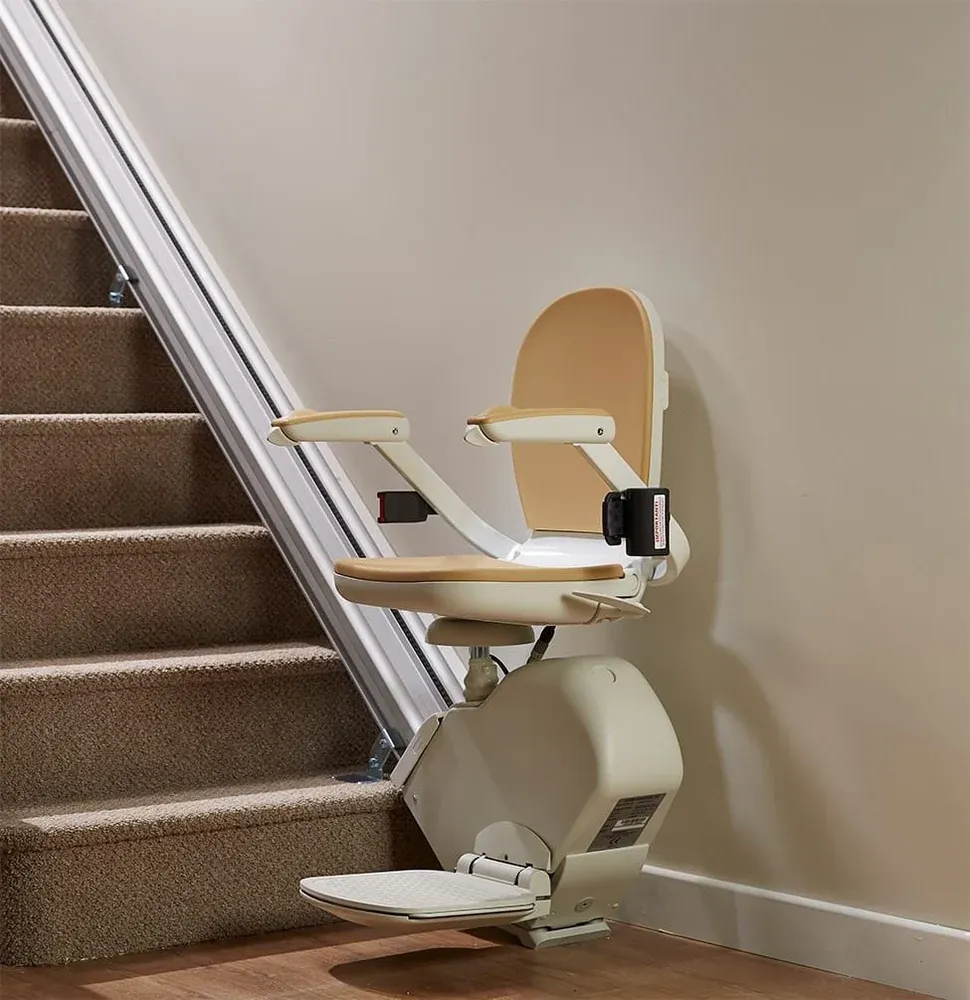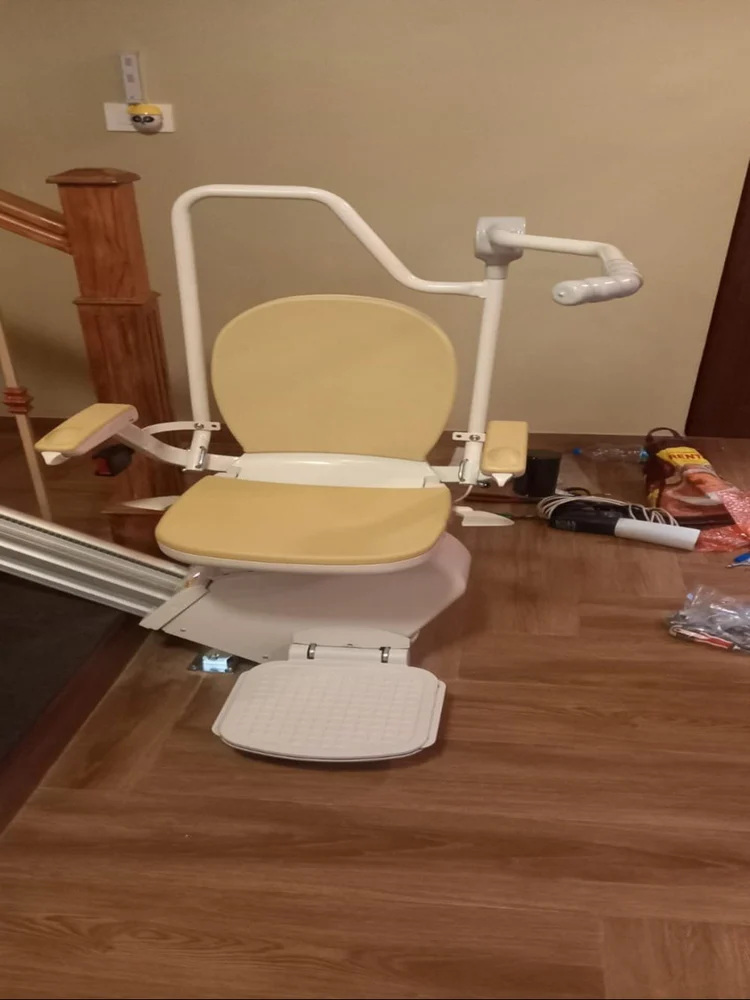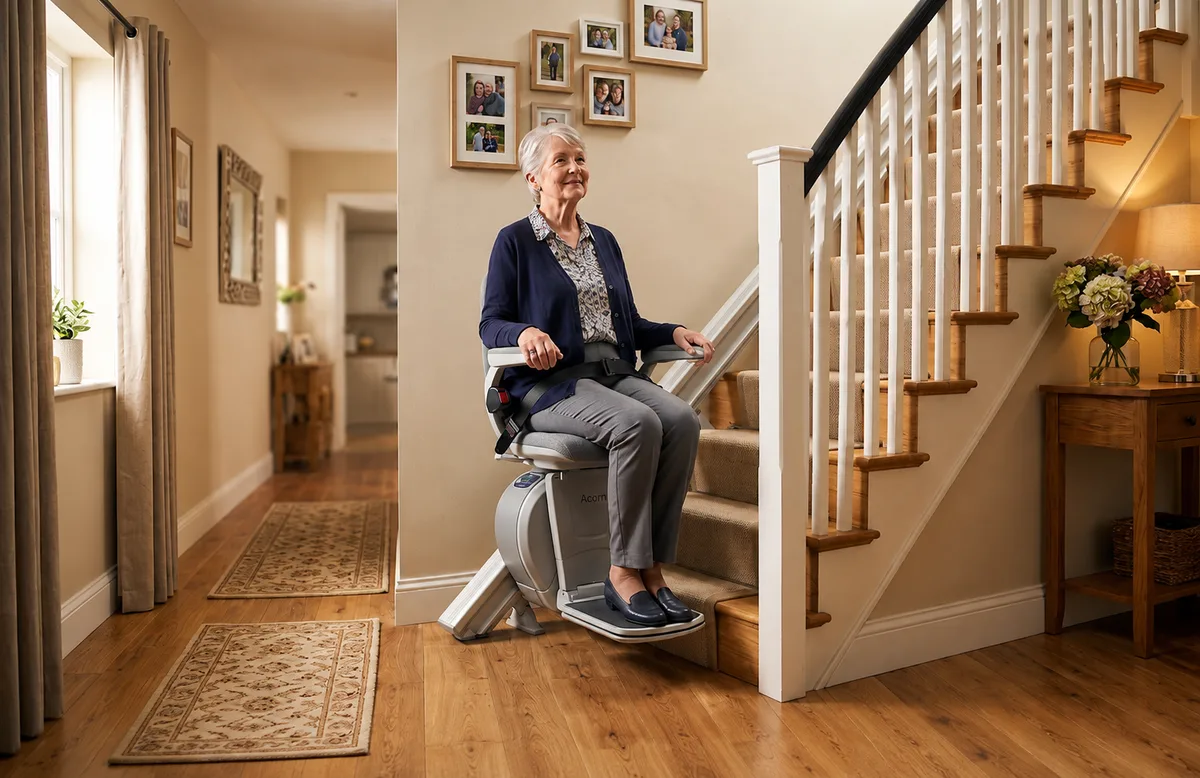
- Straight stair lifts run $2,800–$5,500 installed — the most common and least expensive option.
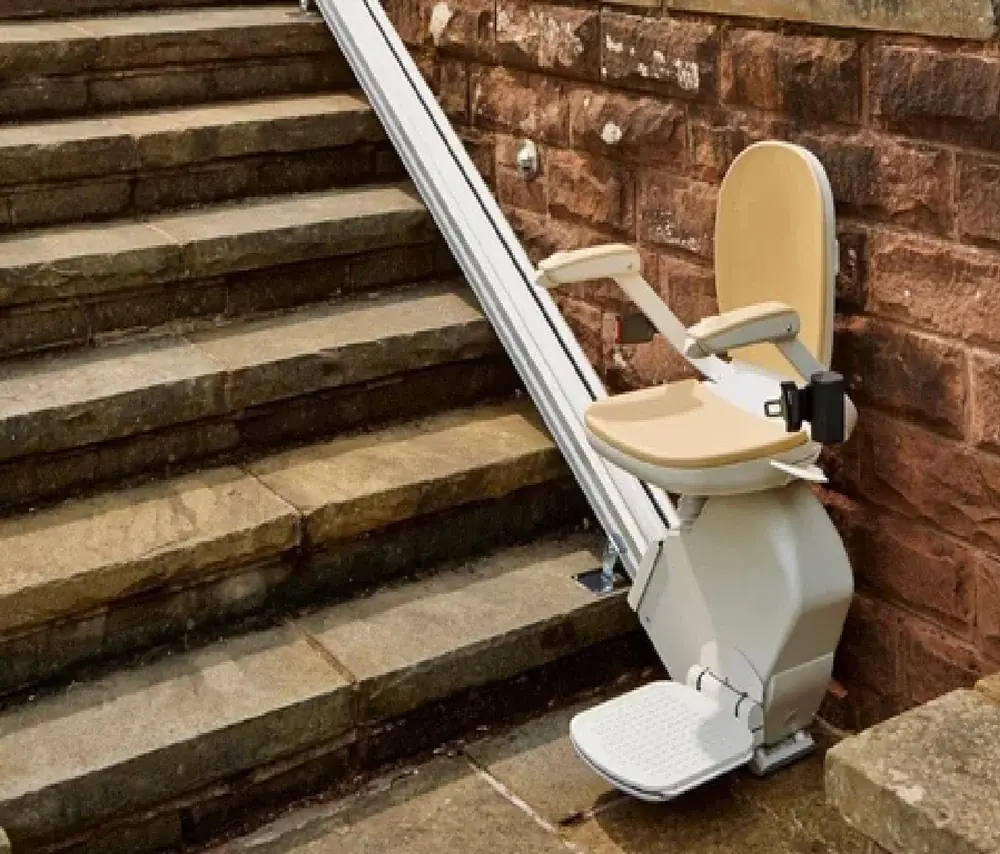
- Outdoor lifts start around $3,500; standing/perch lifts run $4,500–$6,500.
- Monthly rentals cost $150–$300 with no long-term commitment.
- Certified used/refurbished units cost roughly half of a new unit.
- Staircase length, weight capacity, and added features move the price the most.
- The only way to get an exact number is a free in-home assessment.
How Much Does Each Type of Stair Lift Cost?
Straight stair lifts are the cheapest at $2,800–$5,500 installed, while standing/perch lifts run the most at $4,500–$6,500. Every category below solves a different problem, so the price reflects the engineering, not just the brand — here's what to expect before your in-home assessment. Every lift we sell or rent includes professional stair lift installation by our own certified technicians.
| Type | Typical Price | Best For |
|---|---|---|
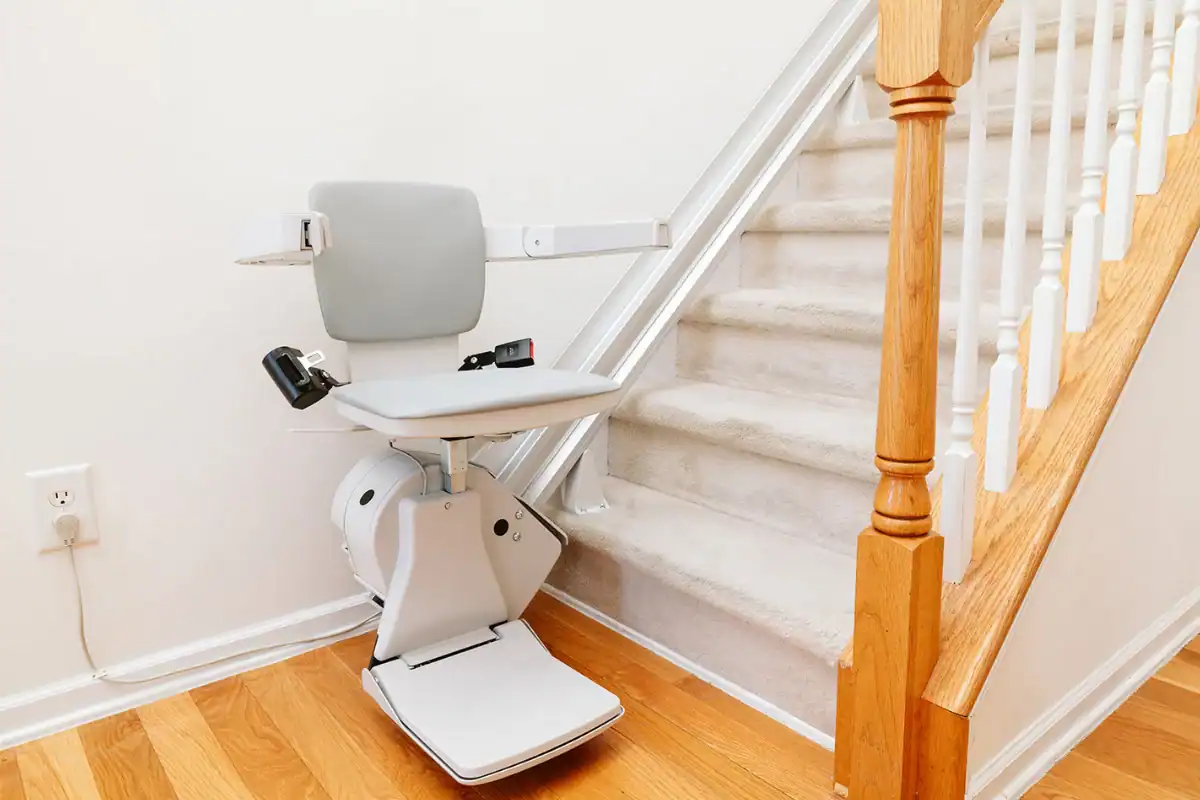
| Straight Stair Lift | $2,800 – $5,500 | Single-flight indoor staircases, no turns |
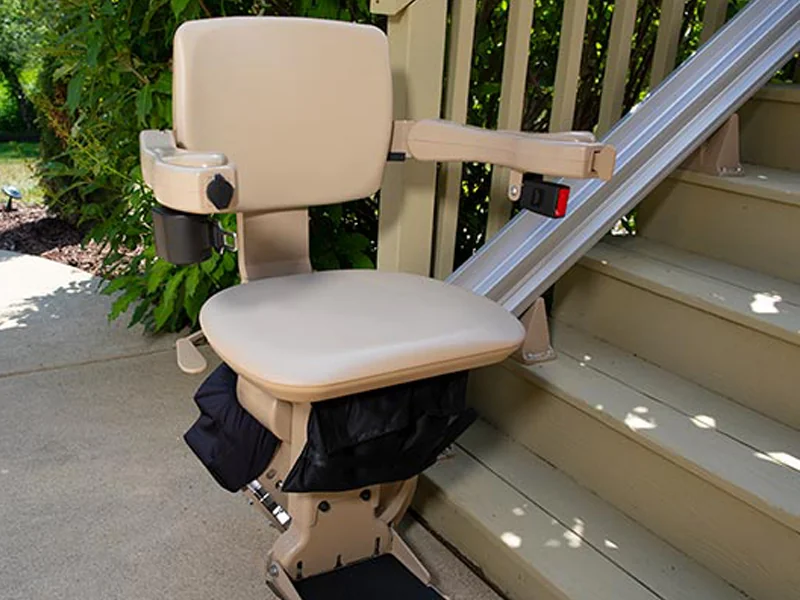
| Outdoor Stair Lift | $3,500 – $6,000 | Porches, decks, and garage-entry steps |
| Standing / Perch Lift | $4,500 – $6,500 | Narrow stairs or stiff knees/hips that can't sit through a full range of motion |
| Rental | $150 – $300 / month | Short-term recovery, rehab, or hospice care |
| Used / Refurbished | ~50% of new-unit price | Budget-conscious buyers who still want a warranty |
Ranges reflect typical installed pricing in Pennsylvania and New Jersey and vary by staircase length, model, and options. They are not a quote.
Wondering specifically why a standing lift costs more than a straight one? See our full straight vs. standing stair lift cost comparison for the breakdown.
What Affects the Price of a Stair Lift?
Staircase length, weight capacity, indoor vs. outdoor placement, and added features are what move a stair lift's price the most. Two homes with a "10-step staircase" can still get quotes thousands of dollars apart once these factors are counted, which is why the variables below matter more than the sticker price of any one model:
- Staircase length. Every additional step adds rail material and installation time.
- Weight capacity. Standard units handle up to 300 lbs; heavy-duty/bariatric models rated for 400–600 lbs cost more.
- Indoor vs. outdoor. Outdoor units need weatherproofing and a higher IP rating, which adds to the base cost.
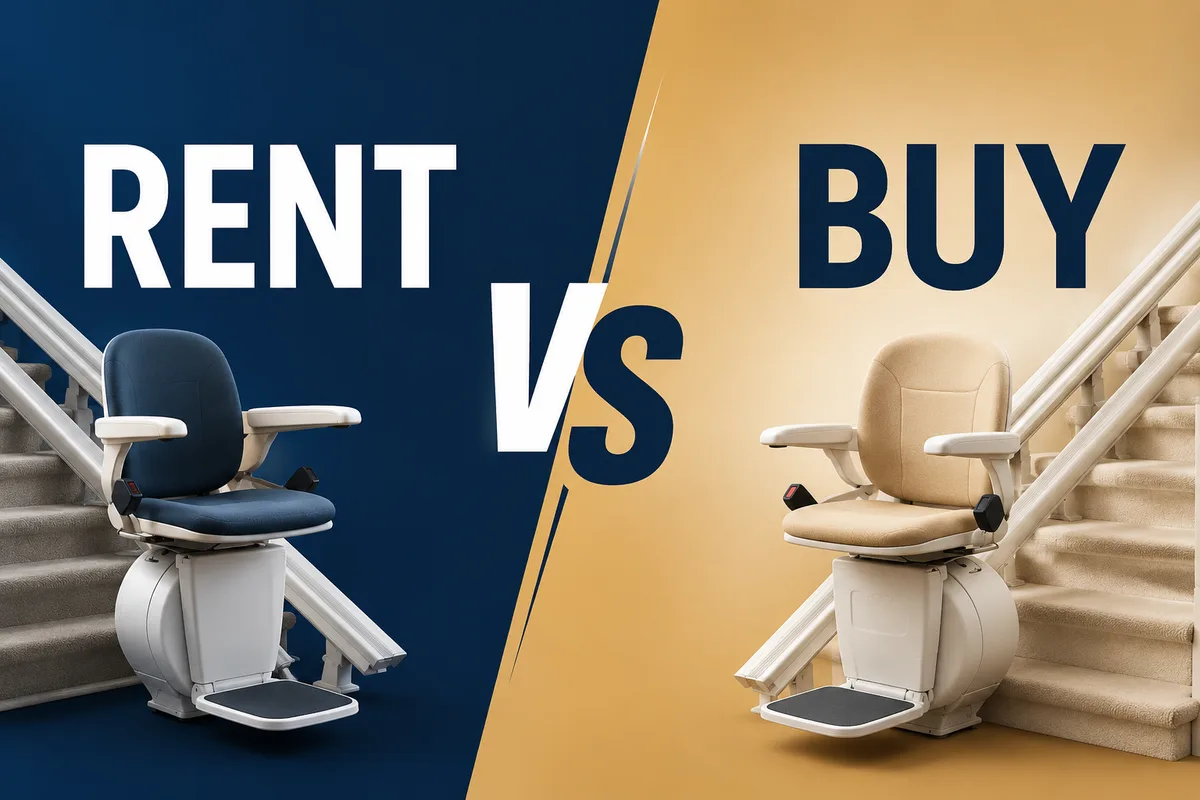
- New vs. used vs. rental. The same physical lift can be priced three different ways depending on ownership structure — buying builds equity, renting keeps upfront cost low, and used/refurbished splits the difference. See our full stair lift rent vs. buy breakdown for the breakeven math.
- Added features. Powered swivel seats, folding rails, remote call/send controls, and extra call stations are optional add-ons, not standard.
- Brand. Premium brands (e.g. Stannah) typically sit above value brands (e.g. Acorn) for comparable specs.
Every range above is a starting point — your exact number depends on your stairs.
Get My Exact Price →What Installation Costs and Hidden Fees Should You Expect?
Installation is included in the price ranges above for standard setups, and most jobs — straight, standing, or outdoor — go in within 2 to 4 hours in a single visit. The fees that catch people off guard usually show up after the initial quote, not in it, so ask about them directly before you sign anything.
Fees that sometimes get added after the fact:
- Removal and disposal of an old or existing unit
- Electrical work if your staircase doesn't already have a nearby outlet
- Rush installation or after-hours scheduling
- Annual service plans beyond the standard parts warranty
A trustworthy installer gives you one itemized, firm quote after seeing your stairs in person — not a phone estimate with fees added later. For the full breakdown of what's included and what can get added on, see our complete guide to stair lift installation cost and hidden fees.
Does Insurance Cover a Stair Lift, and How Can You Finance One?
Original Medicare does not cover stair lifts, since it classifies them as a home modification rather than durable medical equipment. Most homeowners end up paying through a mix of savings, financing, and — in some cases — partial assistance, so it's worth checking a few things before you budget:
- Original Medicare generally treats a stair lift as a home modification, not durable medical equipment, so it's typically not covered — see our full breakdown of whether Medicare covers stair lifts for exactly why, plus which Medicaid and VA programs sometimes can help.
- Some Medicare Advantage plans, VA benefits, and state Medicaid waiver programs may offer partial coverage, depending on your state and plan.
- A stair lift prescribed for a documented medical condition may qualify as a deductible medical expense with the IRS.
- Financing plans (including 0% introductory offers through some installers) can spread the cost over months rather than paying up front.
This is general information, not tax or insurance advice. Confirm coverage and deduction eligibility with your insurer, benefits counselor, or tax professional before you budget around it.
How Do You Get an Exact Price for Your Stairs?
The only accurate way to price your installation is a free in-home assessment, since every staircase is different. A specialist measures your stairs, discusses which type fits your situation, and gives you one firm, written quote — no obligation, no pressure, and no phone estimate that changes once someone actually sees your stairs.
Frequently Asked Questions
-
A used or refurbished straight stair lift is typically the cheapest option, often running about half the price of a new unit. Among new equipment, straight stair lifts are the least expensive type since they use a standard rail with no custom manufacturing.
-
No — a purchased stair lift is a one-time cost with no recurring fees, aside from an optional service plan. Monthly fees only apply if you choose to rent a stair lift instead of buying one, which typically runs $150–$300 per month.
-
Yes, if it's certified and refurbished by a reputable installer. A properly inspected used stair lift costs roughly half of new and still comes with a warranty. Buying second-hand from an unverified seller online carries more risk, since there's no inspection or install guarantee.
-
Original Medicare generally does not cover stair lifts, since it classifies them as a home modification rather than durable medical equipment. Some Medicare Advantage plans, VA benefits, and state Medicaid waiver programs may offer partial coverage — check directly with your plan or a benefits counselor, since rules vary by state and provider.
-
Removal is usually a modest labor charge, often under $200, plus a small patch-and-paint cost for the mounting holes left in the stairs. Many installers waive the removal fee if you're upgrading to a new unit through them.