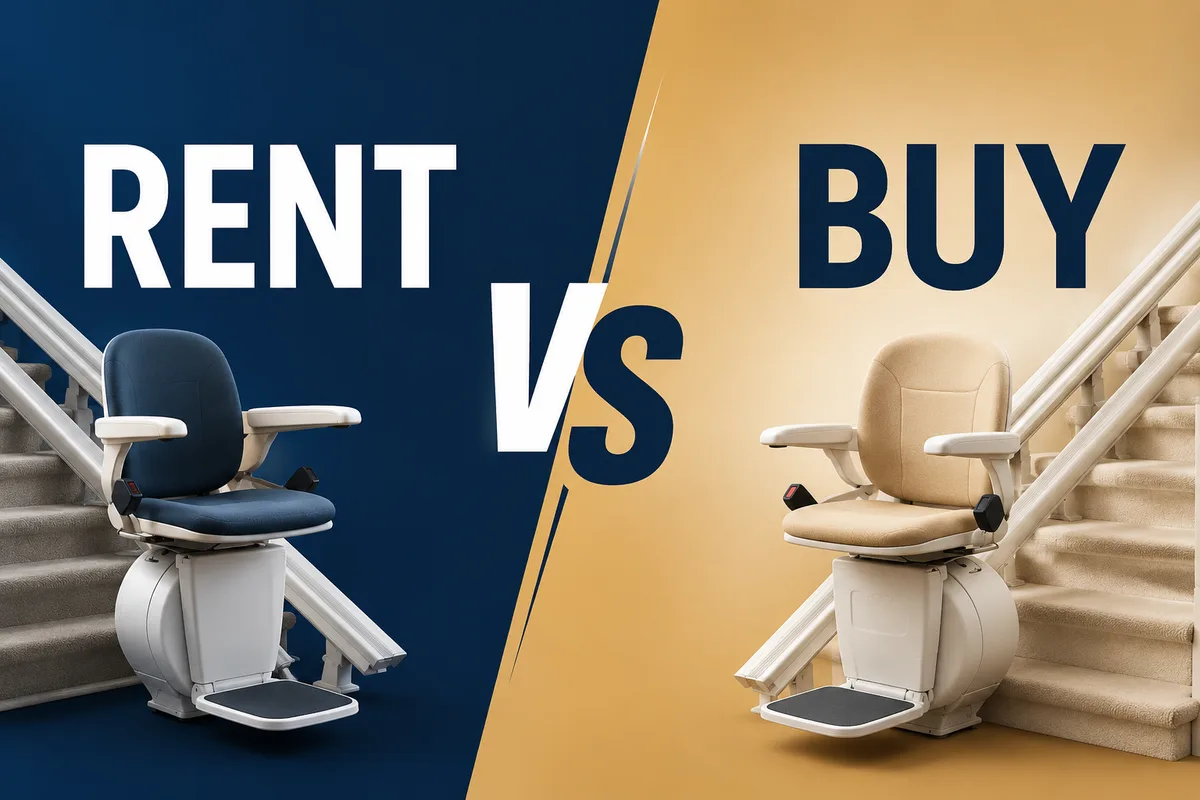
- Renting starts around $150–$300/month with no long-term commitment and free removal.
- Buying a straight stair lift typically costs $2,800–$6,500 installed.
- Rental costs cross the price of a new unit somewhere between 10 and 18 months.
- Renting usually wins for recovery, rehab, or hospice care with a defined end date.
- Buying usually wins for permanent or open-ended mobility needs.
- Many installers, including The Stairlift Company, let rental payments count toward a purchase.
Renting vs. Buying: What's the Difference at a Glance?
Renting keeps upfront cost low and locks in nothing beyond a one-month minimum; buying costs more upfront but builds equity and skips the ongoing bill. The table below lines up every factor side by side. Every lift we sell or rent includes professional stair lift installation by our own certified technicians.
| Factor | Rent | Buy |
|---|---|---|
| Upfront cost | Low (setup + 1st month) | $2,800–$6,500 |
| Ongoing cost | $150–$300/month | None (optional service plan) |
| Minimum commitment | 1 month | — |
| Removal when done | Included, free | Separate cost (~$200) if removed later |
| Ownership / resale value | None | Yes — can be resold or donated |
| Best for | Recovery, rehab, hospice, short stays | Long-term or permanent mobility needs |
Figures reflect typical Pennsylvania and New Jersey pricing and vary by staircase and model. Ask for an itemized quote either way. See our full stair lift cost guide for price ranges by type, including why a standing stair lift costs more than a straight one.
When Does Renting Make Sense?
Renting makes sense whenever the mobility need has a foreseeable end date — recovery, rehab, a temporary visitor, or hospice care. Buying makes more sense once the need looks permanent or open-ended, since that's when ownership starts paying for itself.
Renting usually wins if:
- You're recovering from hip or knee surgery with a known recovery window
- A loved one is visiting or staying temporarily and needs stair access
- You're using it for hospice or end-of-life care
- You're not sure yet whether the mobility need is permanent
- You want to "try before you buy" in your specific home
Buying usually wins if:
- You're planning to age in place long-term
- The mobility need is from a chronic or progressive condition
- You expect to need the lift for more than about a year
- You want a specific brand or feature set
- You'd rather build no ongoing payment into your budget
How Does the Cost Compare Over Time?
Renting stays cheaper for roughly the first 6 to 12 months; past 18 months, buying almost always wins. At a typical rental rate of $200/month against a new straight stair lift priced around $3,500 installed, renting costs less for the first 17–18 months — after that, you've paid more in cumulative rent than the unit would have cost to buy outright, and you still don't own it.
Rent Wins
Lean Rent
Breakeven
Buy Wins
- Under 6 months: Renting is clearly cheaper and far less commitment.
- 6–12 months: Still usually cheaper to rent, but worth asking about a rent-to-own credit.
- 12–18 months: The breakeven zone — get quotes for both and compare directly.
- 18+ months or permanent: Buying is almost always the better financial decision.
Not sure which side of the breakeven line you're on?
Get My Free Assessment →What's Included Whether You Rent or Buy?
A reputable installer includes the same baseline service whether you rent or buy: a free assessment, professional installation, and a working warranty. The only real difference shows up at the end of the agreement, not during it.
- Free in-home assessment and exact quote before you commit
- Professional installation, typically 2–4 hours in a single visit — see the full stair lift installation cost & fees breakdown
- A working warranty or service guarantee for the length of the agreement
- Removal included with a rental; a modest labor fee if you remove a purchased unit later
The difference is what happens at the end: with a rental, the unit leaves with the technician. With a purchase, it's yours to keep, resell, or eventually remove on your own timeline.
How Do You Decide Between Renting and Buying?
Ask yourself one question: do I know roughly how long I'll need this? A defined recovery window points toward renting; an open-ended or permanent need points toward buying, and if you genuinely don't know yet, renting is the lower-risk starting point — many installers, including ours, let a portion of rental payments count toward a purchase if you decide to keep the unit.
Frequently Asked Questions
-
Many installers, including The Stairlift Company, offer a rent-to-own credit option where a portion of what you've paid in rent is applied toward the purchase price if you decide to buy the unit later. Ask about this upfront, since not every rental agreement includes it.
-
Most stair lift rentals have a one-month minimum, with no long-term contract required. This makes rentals a common choice for post-surgery recovery, short rehab stays, or hospice care where the exact length of need isn't known in advance.
-
Yes — reputable stair lift rental agreements include both installation and removal in the monthly rate, with no separate labor bill at either end. Confirm this is included before signing, since it isn't universal across every provider.
-
Not if the need lasts longer than about a year. At a typical rental rate of $150–$300 a month, renting crosses the cost of a new straight stair lift somewhere between 10 and 18 months. For a need under a year, renting is usually cheaper; for a permanent or multi-year need, buying is almost always the better value.
-
Yes — most installers, including The Stairlift Company, let you convert a rental to a purchase at any point, and some apply a portion of what you've already paid in rent toward the buy price. Ask about the rent-to-own credit before you sign the rental agreement, since the terms vary by provider.